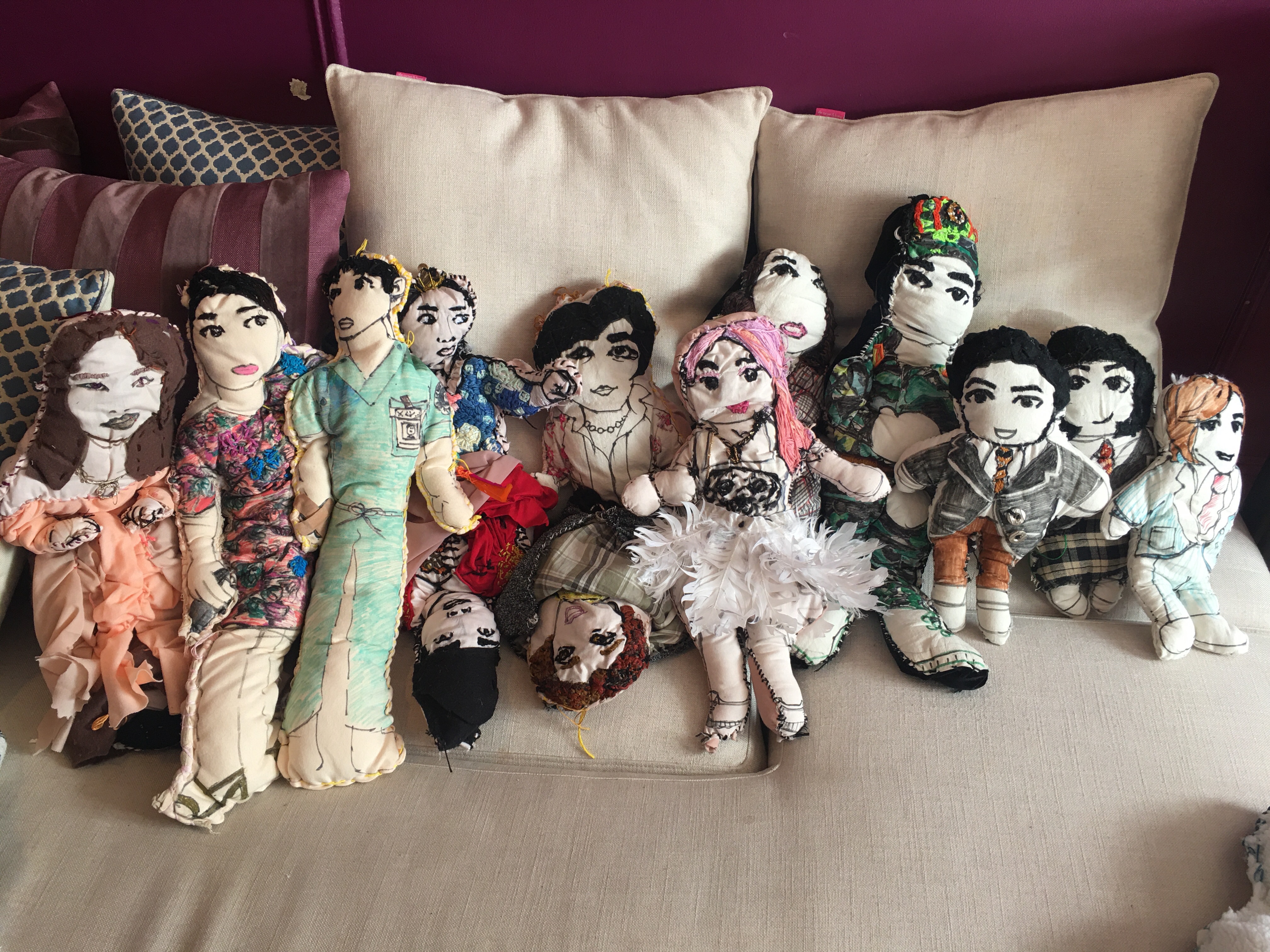
The Korean expression, Yeon-mok-gu-eo (searching for something in the wrong place) has me free associating about all the things humans search for in the wrong place, e.g, insights/meaning, romantic love and yes, for some levity, the clitoris.
As my therapist once noted, I seem to get a high from losing things, searching for them frantically in the wrong place and then recovering them in unlikely spots, e.g, my fairly commonplace dig through my apartment for my phone in expected locations– inside my purse and between the couch cushions- only to find it an hour later in my fridge vegetable drawer. I must perversely enjoy chasing my own tail.
Celebrating my twentieth wedding anniversary this year, I’ve been doing a little reminiscing about my young adult years before meeting my husband– a/k/a my looking-for-love-in all-the-wrong-places years. My friend recently reminded me of a questionable guy I dated while living in Cleveland with my mother after graduating from college. A dear childhood friend who’d gone to Yale with this guy set us up. (I’ve forgiven her since). I emphasize that I knew no one but my mother, grandmother and some older relatives in Cleveland, dating was still offline and I was the lazy sort who expected dates to fall into my lap.
My mother would later confide she found it puzzling that I came home after my first date with this guy, closed her apartment door, leaned my back against it and sank down to the floor like some swooning 50’s girl in bobby socks. All for a guy who may have been smart but was listless and exceptionally dorky. I can’t remember how he spent his time when not with me; he mostly excelled at watching a 24-hour loop of sports on tv (and not even the two I tolerate: tennis, and basketball). Worst of all, he lived with his divorced mother who was a walking stereotype of a withholding, sour-faced WASP. When I met her for the first time in her charmingly restored University row house, she handed the two of us rags and asked us to scrub her unpardonably dusty porch furniture–a metal table and chairs.
Perhaps the biggest problem lay in this champ’s odd habit/fetish of grabbing my lower ear lobe and rubbing it/flicking it with his pincher fingers. He did this, quite unexpectedly on an early date while we sat side by side watching a movie in a theater. I’d flinched and given him side eye because he’d given me no warning of his peculiar affliction and I was a newbie to ear action.
He’d explained he had started to do this to people when his parents were getting divorced as a child and that he did it to his mother, to strangers if they let him and to friends so it wasn’t sexual. It creeped me out that before he’d go in for the kill, he’d stare at my lobes and grin–a kind of rolling up of his sleeves. He once flicked my earlobe so hard the little keloid I had on the back of one earlobe from a past ear piercing gone wrong, bled profusely. Needless to say, our union was short lived; forgive my arrogance, he was lucky I had deigned to date him.*
Though my searching years are over and I’m pleased to be in relative stasis, I look back on my single days with warmth and a chuckle. (What delightful stories I’m left to tell!) I’m not above occasionally watching the Button, a speed dating show by the Cut that simply appears on my phone. These clips typically feature two jarringly discordant strangers seated across a table with an A.I button between them that randomly lights up red during the course of the date. If one of the participants wants to reject the match, they hit the button. The hitch is that the button is a meddlesome punk with a high pitched voice. She blurts out embarrassing/un-swoon worthy facts about the participants. (“James loves guns” or “Carrie is obsessed with Dungeons and Dragons.”). Often the embarrassing fact is so damning, the other contestant dramatically lunges for the button, the loser is ejected and a new person saunters to the table. The goal of the game is to survive a ten minute round to end up with an all expense paid date. Ultimately, the show makes me cringe at humanity—how the cool, sardonic girl who wears a cottagecore grandma dress and can do wheelies in her wheelchair is eliminated too fast, how shamefully classist, ableist and ageist contestants are and how most of us have a rigid vision of what we deserve that we’d not want widely advertised at work or in our eulogies.
I have to wonder what unflattering facts about me the button would have had in its arsenal if my husband and I had been contestants on this show decades ago. What would have made my cordial Canadian lunge across the table to slam the button? Maybe: “She mispronounces words like nuclear in inexplicable ways despite endless corrections (e.g.,hear her say NUC-yoo-LER instead of NU-CLEAR) or “She may look spirited and glow-y today but give her a decade and she’ll need a solid combo of therapy and pharmaceuticals to manage her ADHD and anxiety.”
I recently read that Nietzsche believed humans are misguided in their search for romantic love. He decried that people who consider themselves so open-minded and liberal become biased and narrow-minded when it comes to finding a romantic partner for life. Suddenly, things like race, class, hair color, disability, height and weight requirements are pushed to the forefront. (Nowhere is this more evident than in some Instagram reel I’m embarrassed to have seen where women post videos about wanting “6-6-6”– a man who is six feet tall, makes six figures and has a six inch penis).
Nietzsche would probably have approved of the Button, because he believed that humans are wrong to focus on qualities they admire during courtship and that they’d be better served by learning to appreciate their potential partner’s flaws early on. I imagine for my first date with my husband, 24 years ago, the philosopher would have encouraged me to don my most haggard, baggy attire, e.g., my “Cleveland is the Reason” forest green hoodie that does my figure no favors (in lieu of wearing the form fitting lavender colored cashmere sweater and jeans I actually wore on our first date with my husband at an East Village Korean restaurant). He’d applaud me looping my hair into a sloppy bun and peering through my Lennon-esque wire glasses that always careen down my nose. How would have my date gone if I’d heeded the philosopher’s advice–been snippy and whiny about how exhausted I was, reeked of discontent and self-doubt, rolled my eyes at him or cut him off mid-sentence–things I waited years to unleash. (Of course, I would be a cute 20-something year old so despite this onslaught of unattractive behavior and fugly wear, I might have managed to stay in the game).
Though there are shows like Love Is Blind, that are premised on the idea that couples should get to know each other’s insides before appreciating their externals, this show still has contestants eventually learn the usual stats about their potential partners’ appearance, class, career, pedigree and such before making their mate choice.
Why not have a dating show that is a full fledged surrender to Nietzschean thought? Keep contestants blind until the last episode and have them write letters to each other with plumes and inkwells, have long tortured phone conversations about their negative qualities–avoiding boastful drops about class, pedigree, accomplishments/skills and any social media. Only on the last episode would the winning couple meet unmasked and dolled up. Resumes would be exchanged and charming anecdotes would be proffered; the honeymoon period, delayed. A surefire recipe for success!
Other than love, what else do we humans look for in the wrong place? Since COVID, we’ve supposedly been more enamored with the past— looking to history for inspiration/insights. I’ve been an eager time-traveler–signing up for events like the Titanic immersive experience that made a tour stop in Manhattan. Who wouldn’t enjoy an afternoon contemplating what fate you’d have had on the fabled ship based on your social class/ proximity to the life boats and admiring the baubles that survived the wealthiest passengers? Staring at these artifacts in glass displays, I mentally surveyed my own possessions and failed to find one object that defines me or would be worthy of post-mortem display. Folks, I’m a freaking monk (who often shops in un-monklike patterns!)
Sometimes I wonder if this obsession with the past is misguided/ an ignoble way to shirk the realties of the present. Regardless, it’s particularly fun to revisit long begone time periods; for some the past is something novel. (Next up for this nerdy World War II aficionado: the Dover history museum in Dover, Kent that my friend Michelle raved about that features an actual beer hall with a soundtrack of people dining and the scent of beef stew piped into the room.). The trick is picking the right era to mine for meaning and insights.
On the drive home from a lovely friend-cation in the Berkshires hosted by my friend, the inimitable DB, my other friend, let’s call her Nadia, regaled us with tales of her childhood summers in the 1980s spent at a Russo-pro-Monarchist camp in the Adirondacks. For those unfamiliar with Russo-pro-Monarchist camps, they are sleep over camps lead by Russian Orthodox folks who fled Russia after the 1917 Bolshevik revolution. Some of these people came from nobility and the upper classes. Some were princesses. There was supposedly one Romanov. One man claimed his family had owned Serbia.
Nestled amidst idyllic landscapes and the rolling hills of an upstate New York region known more for apple orchards than tsarist nostalgia, this camp was a misplaced time capsule.** Groups of children ages 5-18 from across the United States were dropped off in the Adirondack woods for the summer and sheltered inside military tents. For roughly $1,000 a summer for a family of four, kids were divided into four camps divided by age and gender and encouraged to engage in winsome hijinks like stealing the flag from an “enemy camp.” Campers were told they were preparing for the white revolution to take Russia back from the Communists. Each day (as every day ought) began with singing God Save the King under a flag of imperial Russia adorned with a two-headed eagle.
And all this time, I thought my Quaker sleepaway camp in Milford, PA, generously called “rustic”, took the cake with its springy mattresses and detached “bingey” (bathroom) that required us to leave our cabin at night and feel around in the dark, cold night for a row of toilet stalls inside a shed. But this Russo-Monarchist camp went way beyond “rustic”; it lacked running water or electricity. Campers showered in a water fall. As Nadia described, every year a bunch of campers would get stomach aches because of unwashed dishes. There was no refrigeration so the kids ate processed cheese and white bread. Not to mention, there were no toilets, just outhouses–holes in the earth that were lined with kitty litter. If you did something wrong like not clean your cabin to satisfaction, your punishment could be climbing up a hill with two large bags of kitty litter on your shoulders. Nadia added, once a girl passed out.
Nadia, spoke of her summers with some affection and humor. For there were moments of giddy normalcy and the unique pride that comes with survival that’s not available to well-off children today. If, let’s say, the young girls camp stole a flag from the older boy’s camp, the girls could make the boys parade around wearing girls’ clothing. Campers would earn feathers as badges if they managed not to utter a single word for 24 to 72 hours. Another challenge: not eating anything or successfully hiding from the other campers in the woods without being tracked down for 24 to 48 hours. As Nadia described, once when she was ten she hid in the woods with some other girls for 24 hours and earned a feather for her considerable efforts. This included sleeping, mostly unsheltered, in the dark woods. When it rained, they had to sneak into another camp group and beg an older male camper to help them build a lean to with a tarp thrown over it to shield them from the elements. (As my friend recalled, the horror of hiding in the dark woods skyrocketed when their staticy hand-held radio revealed that a murderer had just escaped from the local prison. True story!)
For those whose interest I may have piqued, there’s probably running water at this camp now! If you seek a cheaper alternative to the military for your offspring, maybe think (quite logically) that East Coast overnight camps are the domain of overprivileged scamps and are either principally against or financially unable to send your kid to camp with a trunk brim with Lululemon , consider this still intact camp. (Please note the description of the summer camp as “robust” and do not blame me if your child returns with dysentery).
This near-Yellowjackets experience seems to show that looking backwards for meaning can be a wrongheaded, dangerous business. (Though it’s true these modern-day pro-monarchists were stridently anti-Putin so points for that, I guess?)
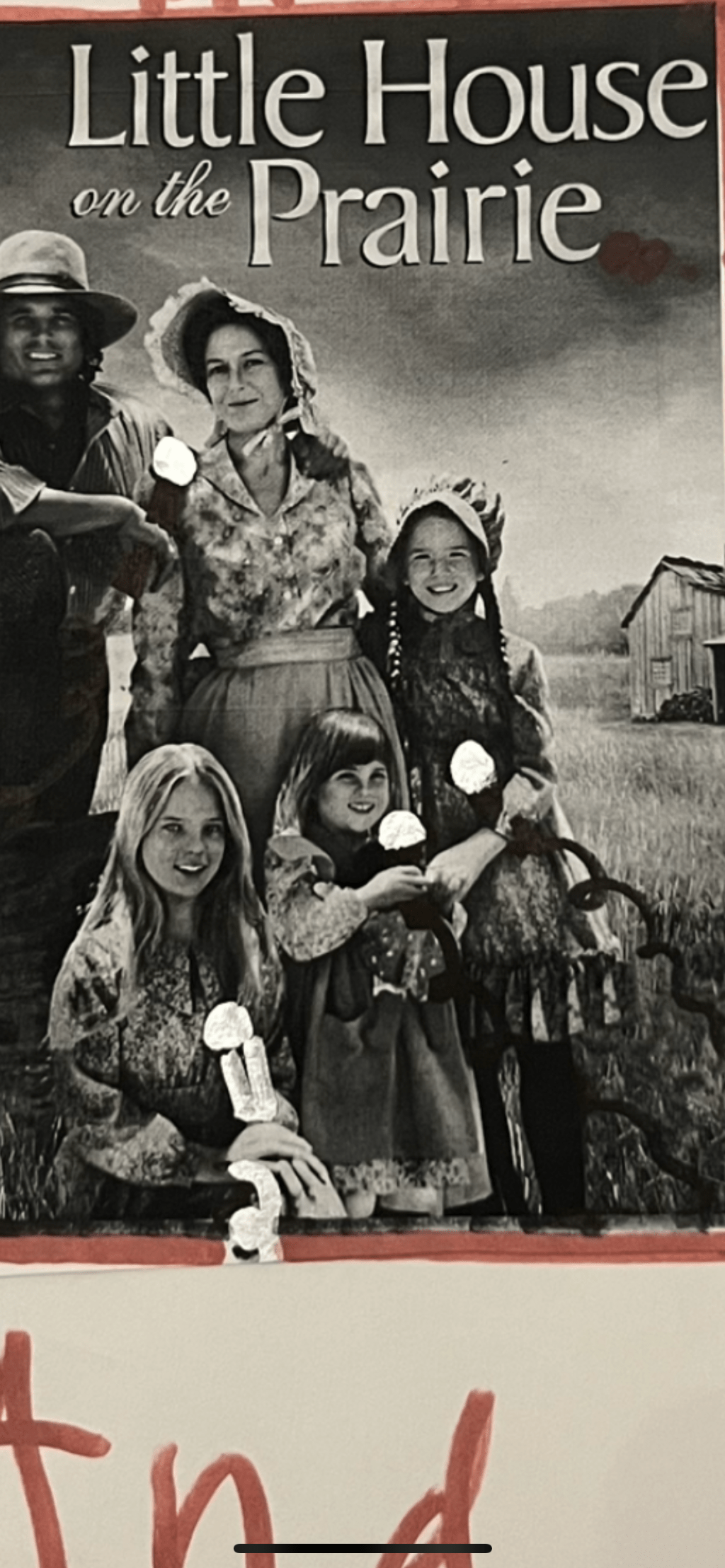
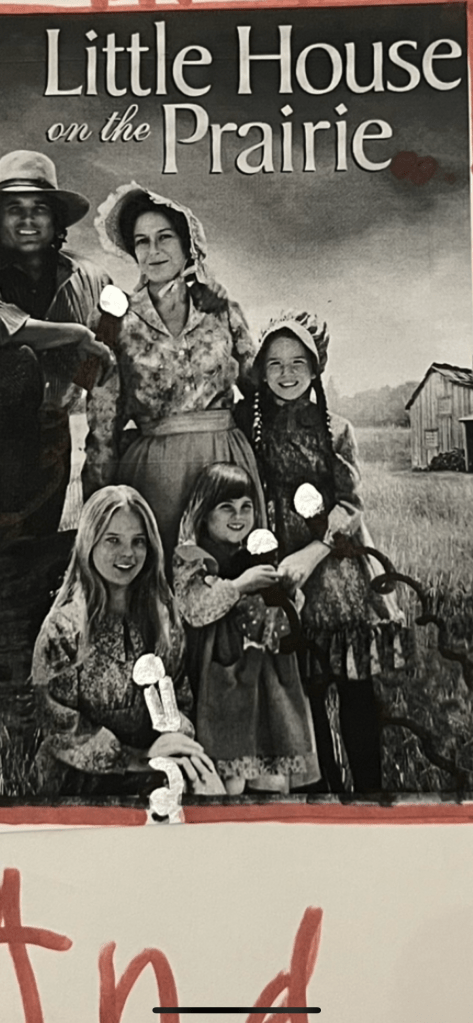
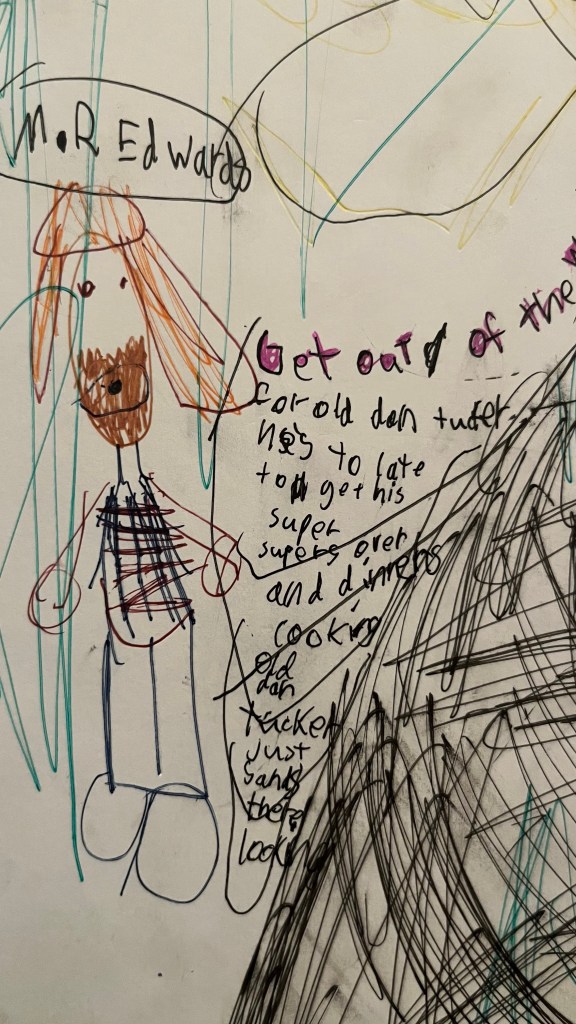
The past year, my eight year old daughter and I have turned to the 19th century American prairie days for meaning/enjoyment. Forced to watch reruns of Little House on the Prairie, a childhood staple of mine, my gal developed an endearing obsession with the Olsons and Ingalls families. Demonstrating the dangers of mining history for meaning and amusement, my daughter took it upon herself to memorize a few lines of a seemingly simple folk song Old Dan Tucker, that Mr. Edwards, a beloved, struggling farmer with a weakness for a mid-day jug, routinely sang to himself as he did his chores.
Unbeknownst to us, I discovered while writing this post, that his ditty was a racist minstrel song. (It really is hard to tell from the few innocuous-seeming lyrics she memorized. But I’m glad I found out before she offered her musical stylings and accompanying jig for her school talent show, which is a completely plausible scenario). She’s also working on an elaborate drawing where over time, she adds images of her favorite scenes from the show. (My favorite little sketches are below–one of the town doctor and his beautiful, but “inappropriately young” fiance and another of Mr. Edwards singing Old Dan Tucker).
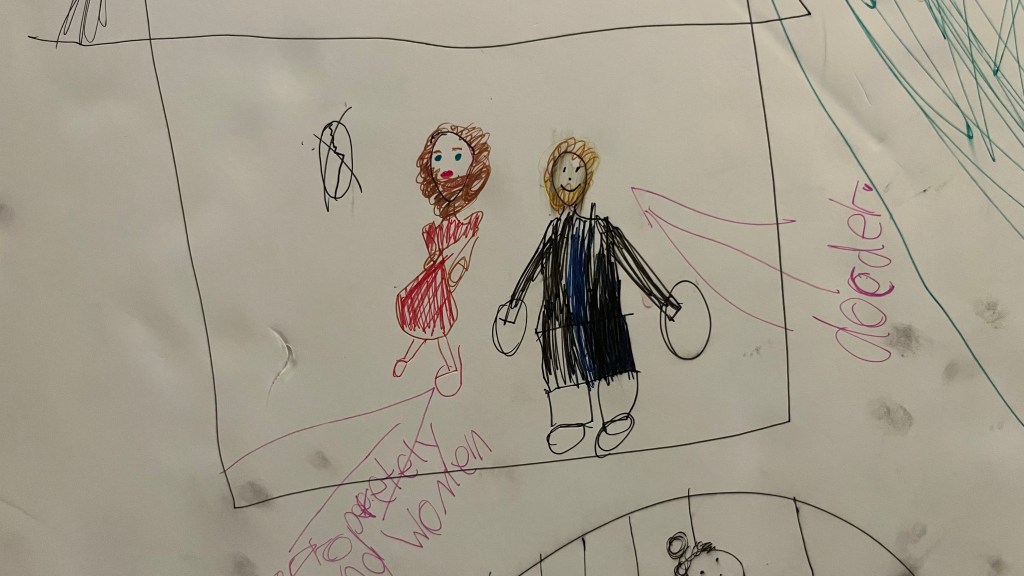
Little House is a commitment at nine seasons so it’s no wonder, having ploughed through most episodes, the show has infiltrated my mind. It now dominates my frame of references to the extent that one night my kids heard me muttering too loudly to myself “you’re no Charles Ingalls!” after my husband lacked the patience/time to help me fix our television remote. (I figured it out myself). For Charles Ingalls, the hard-labor-loving Wisconsin farmer, would surely have settled the matter swiftly! (Cleary, I’m no match for Succession‘s acerbic Roy family when it comes to foul-mouthed, clever barbs. Also, pardon my rash of Succession references. I’m mourning its end).
To us, it makes perfect sense that my daughter’s birthday party this year was a Little House on the Prairie karaoke party at a Korean restaurant–complete with bonnets, activities like buying stick candy and other modest treats with provided pennies at a table “mercantile store”, decorating handmade corn husk dolls, playing Cat’s Cradle and scarfing down pizza, pie and cookies shaped like horses, flowers and fiddles made by a young friend.
I was admittedly a stitch disappointed to learn our family is not unique in our obsession with the ol’ Prairie Days and/or the earlier colonial days. Indeed, there are plenty modern day podcasts and blogs dissecting each episode of Little House. Perhaps thanks to cottagecore, when you try to buy a Prairie bonnet online, you find out there are only two left! I’ve heard that city folk such as some friends of mine are heading to the newly revamped/historically more accurate Colonial Williamsburg over school breaks in droves. (My family enjoyed the much closer Old Beth Page Village in Long Island this past year).
As someone who is easily overwhelmed by modern urban life, I often at least think I crave a simpler life. For I’m a cranky luddite and a stinky multitasker who resents the modern day 24/7 implication of text messages and gasp, the very unwelcome and frankly, outlandish expectation that I keep abreast of my coworkers’ Teams messages at work in addition to tending to email. Do you remember when actor Daniel Day Lewis left his film career to become a cobbler in a small Italian village? I daydreamed of this trajectory before I read about the chemicals used to soften leather that could potentially (further) soften my brain. (But here I am forever wed to NYC-a red-eyed urbanite choking on wildfire particles).
I attribute my long standing love of treehouses to my romanticization of a simple rural life and a wish to have my own remote space away from the mad bustle below. Maybe it’s the advent of my 50th birthday this year, but more than ever, I seek perch–perspective on what is down below. Treehouses also represent a certain freedom from societal constraints. No atrocious co-op board frowning on your life choices, no one to call your treehouse’s glow-in-the dark spiral slide that delivers you from the trees to the ground, inelegant. Plus I’ve seen, pretty luxe treehouses overlooking crystalline lakes/the French Alps that are almost affordable (certainly when compared to NYC housing). I’ve been researching and then slowly drawing miraculous treehouses across the map that I plan to visit or even inhabit with my family one day. Though my drive to complete this project is stymied by the very real possibility that some A.I program could do just as good or a much better job than I could. (If you find one of those AI programs that do graphic design, send it a prompt of “draw me a map of the treehouses of the world with treehouses illustrated” and this results in a beautifully rendered map, please do not tell me. (Fuck you, disposability and obsolescence! )
There’s a lot to learn from Prairie times but most of it is cliched. There’s probably more to leave behind such as: the primacy of female household drudgery (see the episode where Caroline gets a rare moment to herself only to spend it making so many apple pies for her church she collapses), lame cures for ailments provided by the town’s only doctor, e.g, an avalanche of ice cubes surrounding your head as you lay in bed, the lack of maternity leave and accommodations for pregnant women; see adult Laura balancing a stick with two pails of water on her very pregnant shoulders under the Wisconsin summer sun; disfiguring, boil-laden plagues, bonnets (because I think they are universally unflattering), provincial/racist views, e.g., the Ingalls mother, Caroline, equating a Algonquin baby with a wild animal, miserably hard benches in school and church, and what looks like a nauseating, gamey diet of bunny/pheasant x 7.
If the past isn’t where you have looked for meaning, chances are you’ve looked to your job for the same. Of course, supposedly COVID brought on quiet quitting as Americans realized that gunning it at work is no guarantee of a joyful and meaningful life. I recently read that around Spring 2021, many young Chinese people engaged in a lying flat protest, a rebellion against hyperstriving, against spending a large percentage of their income on private tutoring for their children and against stacking infinite degrees and accomplishments for uncertain end. The Chinese counterpart to our quiet quitting supposedly began with one Chinese man’s viral post on being unemployed; he said the stresses of contemporary life were unnecessary and that we ought to look to the Greek God Diogenes who “sleeps on his own barrel taking in the sun” and lived the life of a dog who is squarely focused on the present. Supposedly, these young folk shunning the most prestigious careers in China have been comically referred to as “leek people,” because supposedly leeks cannot be harvested when they lie flat. This untethering from the rat race, provoked Chinese official Wu Quian to say “there is only splendor in struggle and endeavor. Young people, come on!”
The splendor of work is not something I see often as a plaintiff’s side employment attorney. A male Black chef routinely called the n-word by managers who think this is acceptable work banter, countless disabled employees who are fired after asking for minor accommodations, visibly pregnant employees with high risk pregnancies or amputees without a full set of fingers being asked to lift heavy boxes, queer employees mocked or gleefully misgendered by their supervisors despite protest and female employees groped and leered at every day at work only to be terminated after lodging a complaint.
I say, let’s extend this leek rebellion to parenting. We all know parents, this author included, wrongly look to their kids’ accomplishments for meaning and purpose. Can we commit to leek-parenting? For me, this is the opposite of tiger motherhood. It’s a return to the 1970’s when playdates were abundant and there were nary an after-school activity in sight. Caveat: this can veer into parental neglect. When my son was in public middle school, my husband, a Canadian who dismisses the importance of grades, and I, eager to be a relaxed mother, had a general idea of how our son was doing based on detailed teacher comments but refused to look up his letter grades online for literally years. (When it was time to apply for public high school, looking for years of grades for the first time was maybe too adrenaline-pumping).
The drive to forge precociously talented children is misery. Be a leek! Recently, while watching a 2nd grade talent show of mostly girls doing dance routines and playing instruments, I admired the lone boy who chose to do a strange interpretive “dinosaur dance” to a monotonal, solemn orchestral soundtrack that was sporadically punctuated by faded roars. He evidenced no classic “talents” per se but every time he did what appeared to be a spirited jumping jack–completely divorced from the slow tempo and mood of the soundtrack– I wanted to cheer (and cheer I did). This kid is unmoored/possibly untutored. I suspect he has parents who let him play rampantly. He’s the antithesis of what oddly graces my Instagram feed–college counselors declaring that high schoolers need double-digit AP classes, 4.33 grades and a resume that includes starting a full-fledged non profit.
One viral phenomenon that I found while writing this post, a game where women ask men to identify the clitoris on a drawing of the vagina, and laugh at the off-the- mark results, well illustrates how looking for something in the wrong place can be fun.
Bye my fellow leeks! Enjoy looking for things in the wrong places.
CrazyMCAsian
*quote from Succession that I had hoped to use in my life because I love the word “deign”
** A Chat GPT generated sentence

 Crazy middle class asian